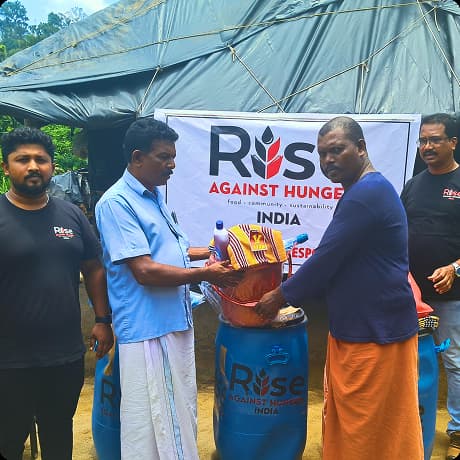
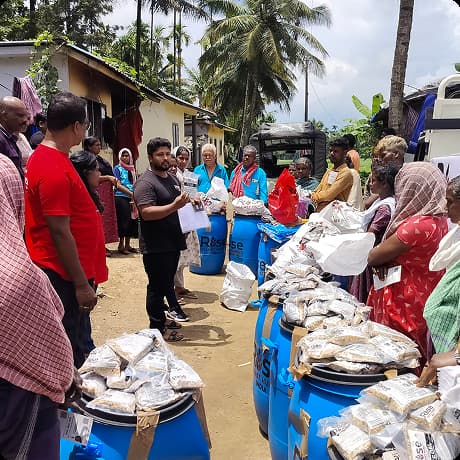
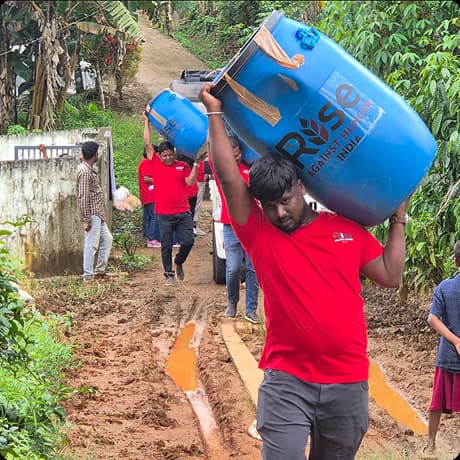
Rise Against Hunger India remained steadfast in its mission to respond swiftly and compassionately to emergencies affecting vulnerable populations
When everyday access to food, wages, and market systems are destroyed in the wake of emergencies, Rise Against Hunger India works directly as well as through its field teams as well as its network of grassroots partners active on the ground to address these needs. We strive to ensure aid is efficiently and effectively deployed to and received by communities when it is needed most.
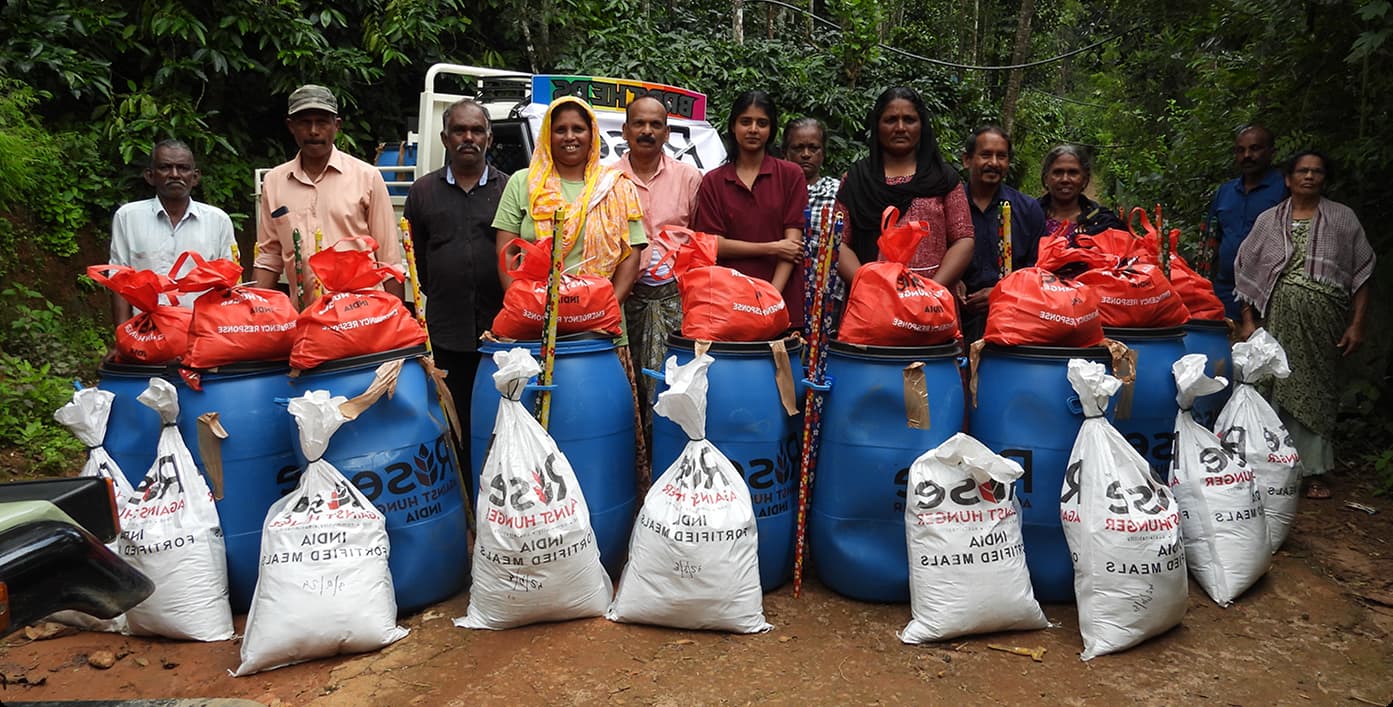
Wayanad Landslide Response supported 7,011 individuals through a multi-layered recovery package that included support kits for 199 families, food kits for 200 households, and fortified meals for 417 households. Additionally, 105 household nutrition gardens were set up, 25 families received tools and equipment to restart their lives, 65 households were provided cash vouchers, 128 were linked to social safety nets schemes.
Individuals supported through multi-layered recovery
Families received support kits
Households received food kits
Households provided fortified meals
Household nutrition gardens established
Families received tools & equipment to restart livelihoods
Households supported with cash vouchers
Households linked to social protection schemes
In the wake of the Vijayawada floods, swift humanitarian efforts were launched in collaboration with two dedicated local organizations. Navajeevan Bala Bhavan distributed 100 Mela boxes in Krishna district, reaching 114 households and 460 family members with essential supplies. At the same time, Help the Helpless Christian Ministries supported affected families in Vijayawada district by distributing 20 boxes, benefitting 56 households and 162 family members. These coordinated efforts highlight the power of community-led disaster response, fostering solidarity and resilience among vulnerable populations.
Navajeevan Bala Bhavan distributed Mela boxes in Krishna district
Households and 460 family members
Vijayawada district by distributing boxes
Households
To help communities cope with extreme summer heat, 8 Jala Chhatra stations were set up across 4 blocks, providing safe drinking water to nearly 6,400 travelers and by-passers. This initiative offered timely relief during harsh weather conditions, promoting public welfare and ensuring hydration on the go.
Providing safe drinking water to travelers and by-passers
Jala Chhatra stations 4 blocks
Swift crisis response through direct fieldwork and local partnerships
Climate Resilience Building
Integrating climate adaptation and coping strategies into emergency preparedness,
recognizing that climate disasters disproportionately impact vulnerable communities.
Recovery Transition Support
Supporting communities in transitioning from immediate crisis response to long-term recovery
through sustained assistance and capacity building.
Emergency Response Types