Empowering Communities

Rise Against Hunger India believes that true transformation begins when communities are empowered to define and lead their own development. Rise Against Hunger India bolsters agricultural production and incomes through programs promoting improved agricultural methods, business skills, and market access. With training and access to quality seeds and fertilizers, farmers can increase production and harvest a variety of nutritious crops.

This also entails encouraging farmers to become resilient to climate change issues by adapting climate smart agriculture and other adaptive farming practices. By supporting the establishment and augmentation of fish and livestock production, we also provide pathways to diversifying diets and improving nutritional outcomes. From promoting traditional skills and climate-smart farming to supporting women-led poultry enterprises and tailoring-based income generation, the programs helped communities enhance nutrition, improve income, and create assets like soak pits and compost tanks to ensure long-term food and water security. 
Initiatives

Mother and Child Health

Social Safety Net

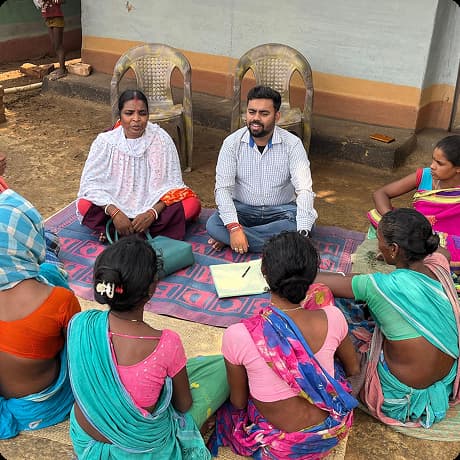
Across rural villages in Bihar, Jharkhand, Chhattisgarh, and Odisha, we undertook an extensive outreach initiative to connect households with vital social safety net schemes. Through systematic mapping, 2,393 households were identified for support, and 12 dedicated enrolment camps were organized to facilitate access.

As a result, 2,163 households were successfully linked to essential benefits, including healthcare through Ayushman Bharat Cards, financial assistance via E-Shram Cards, food security with Ration Cards, support for the elderly through Old Age Pensions, and crop protection under the Fasal Bima Yojana.

This program has strengthened social equity, improved livelihoods, and enhanced the economic resilience of rural communities.

  • 2,163

    Households were successfully linked to essential benefits

  • 12

    Dedicated enrollment camps

Fortified Meal Program

Agricultural Improvement

AGROSAFE - (Agricultural Growth and Resilience Optimization through Sustainable Agro Forestry & Efficient water management)

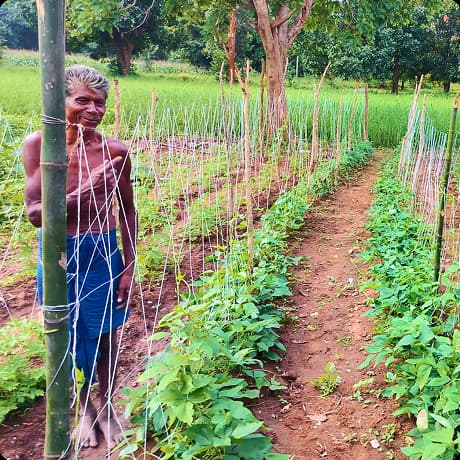
In 10 villages of Pathakhalia Gram Panchayat in Chandahandi Block, Nabarangpur district (Odisha), the AGROSAFE project by Rise Against Hunger India is tackling the challenges of soil degradation and water scarcity critical issues affecting smallholder farmers.

Years of continuous maize farming have led to significant soil degradation, reducing long-term productivity. Meanwhile, with most farmers relying on rain-fed agriculture, water scarcity has made crop production increasingly uncertain. To build resilience against these climate-related risks and promote sustainable livelihoods, the project is working with 160 farmers to revive land productivity and improve income opportunities in Chandahandi. As part of its interventions, 147 farmers have been supported so far 100 farmers engaged in vegetable production, 40 in pond digging and renovation, and 20 in Wadi (orchard) development.

Through these efforts, AGROSAFE is strengthening local farming systems, improving food security, and helping communities transition toward more sustainable and climate-adaptive agricultural practices.

  • 160

    Farmers Engaged

  • 147

    Farmers Supported with climate-resilient practices

  • 100

    Farmers in vegetable production

  • 40

    Farmers in pond digging & renovation

  • 20

    Farmers in Wadi (orchard) development

Safety Net Program

Rainfed to Resilience

Community Irrigation for Sustainable Agriculture under Changing Climate (R2-CISACC)-

Katekalyan Block in Dantewada district, Chhattisgarh, experiences extreme variation in rainfall, the highest in the region, due to climate change. This has made farming highly unpredictable, with most farmers growing only a single seasonal crop. Limited resources and lack of access to modern techniques have made second season farming too risky for many.

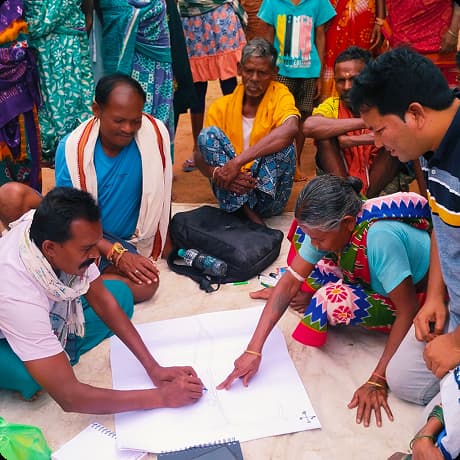
To address this, Rise Against Hunger India launched the R2R initiative, aimed at enhancing climate resilience and promoting sustainable agricultural practices in this rainfed area. As a pilot, 102 farmers formed 10 farmer groups, each committing to build a pond for rainwater harvesting. This water is now used for second season cropping and life-saving irrigation during dry spells. The farmers were trained in group governance, water resource management, and shared equipment usage. With support from the Krishi Vigyan Kendra (KVK), they received technical training on efficient water management, crop diversification, and conservation techniques.

Additionally, 100 farmers received less water-intensive legume seeds such as black gram and saplings including drumstick, papaya, and amla. Demonstrations on micro-irrigation methods helped them explore water-efficient irrigation options suitable for their land and climate.

  • 102

    Farmers participated in the pilot initiative

  • 10

    Farmer groups formed for collective action

  • 10

    Ponds built for rainwater harvesting

  • 100

    Farmers received seeds and saplings

Safety Net Program

Livelihood Generation

SCALE SED (Strengthening Capacities of Rural Communities and Ensuring Sustainable Livelihoods through Social Enterprise Development) -

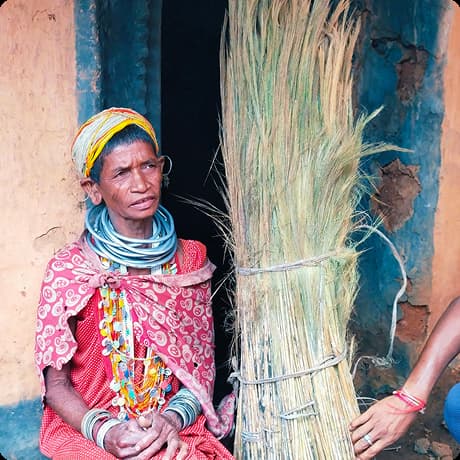
SCALE SED focuses on enhancing food security and livelihoods through a sustainable enterprise model in Odisha. The project empowers 320 Bonda tribal households by promoting market-aligned traditional arts and crafts, such as beadwork, and by supporting the sustainable harvesting and processing of non-timber forest products (NTFPs) for better value realization.

The initiative is anchored by the Amakund Producer Organisation, a collective of 320 members led by a 15-member all-women executive committee. As part of capacity-building efforts, 70 members were trained in bead-based tribal jewellery design, resulting in 84 unique, market-ready products.

The group also engages in value addition of hill broom (Thysanolaena maxima)—a high-value NTFP collected from local forests. 30 members received training to produce brooms with diverse handles and designs. With these natural resources under pressure, the community has also been trained in sustainable harvesting practices. In a first-of-its-kind effort, the collective sold 1.1 metric tonnes of graded raw jackfruit to an external vendor after successfully establishing market linkages.

SCALE SED continues to expand the producer group’s portfolio across tribal art, crafts, and NTFPs, and is currently in the process of developing a digital marketplace to promote and sell its products more widely.

  • 320

    Bonda tribal households empowered

  • 70

    Members trained in bead-based jewellery design

  • 30

    Members trained in hill broom making (diverse handles & designs)

  • 1.1

    Metric tonnes of graded raw jackfruit sold

Safety Net Program

Backyard Poultry Farming

Rise Against Hunger India is working with Indigenous communities in remote and vulnerable regions of Bihar and Jharkhand, where access to regular income sources remains a significant challenge. In these areas, isolation, limited infrastructure, and lack of livelihood options have made it difficult for families to achieve economic stability.

To address this, the project promotes backyard poultry as a sustainable solution. It provides a reliable source of protein-rich food, such as eggs and meat, improving nutrition and food security. Families can also earn additional income by selling surplus eggs, chicks, or meat, thus enhancing their economic well-being.

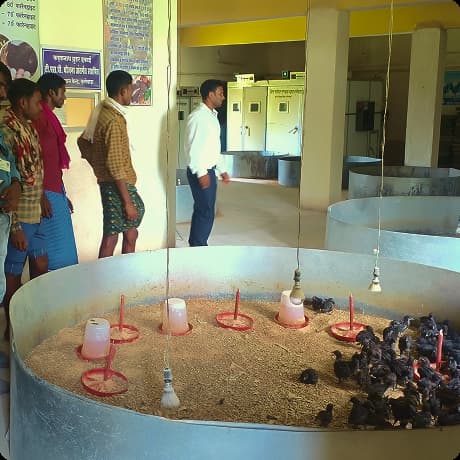
To support this initiative, Ethnoveterinary skilling and re-skilling is provided to interested beneficiaries for the proper care of livestock. All 300 beneficiaries across the targeted areas have received poultry farming training from Krishi Vigyan Kendra (KVK) and expert trainers. The training covers primary treatment, vaccination to prevent mortality, shed management, and best practices in feeding and watering.

  • 300

    Beneficiaries trained in poultry farming